Our final activity on the second last day of our visit to Scotland was a booked boat trip to the Isle of May. With two previous boat trips cancelled for various reasons, we were hoping that it would be ‘third try lucky’, but during the days beforehand, the weather forecast was doing much for our confidence.
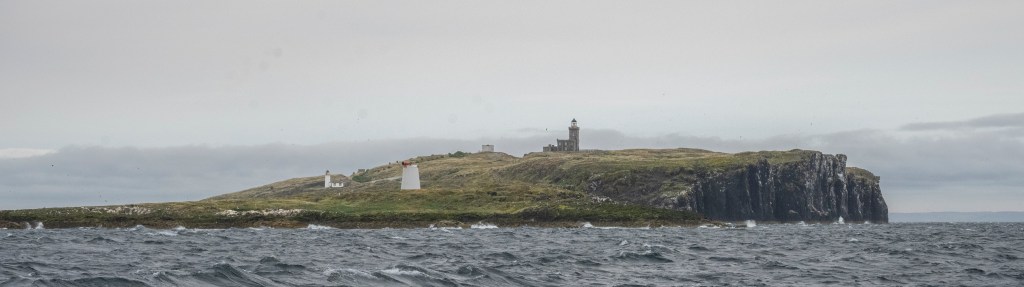
The Isle of May
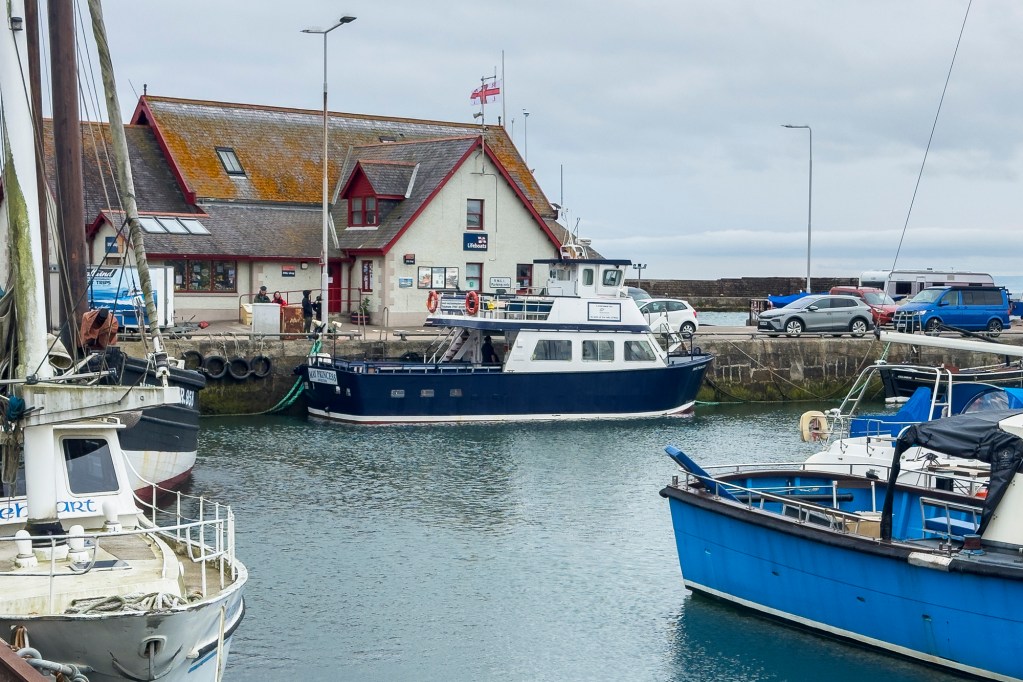
However, we rose early to drive to Anstruther on the Fife coast, north of Kirkcaldy where I was born. Fortunately, it was not raining, although rather windy and chilly. We arrived in plenty of time for boarding and were glad when we paid our fare and everything looked good to go.
A key navigation aid for shipping entering the Firth of Forth, the Isle of May is located between the Fife and East Lothian coasts. I recalled that, as a child, we used to caravan close by every year and we would hear the loud blast of the fog horns on the island during times of low visibility. Little did I know then that I would one day be privileged to visit the island.
Along with 98 other passengers, some with camera lenses much bigger than mine, we boarded the boat and set off into a brisk wind. Sitting on the lower deck at sea level, waves flooded onto the deck, wetting everyone’s feet, but the crossing was otherwise uneventful.
Anstruther Harbour
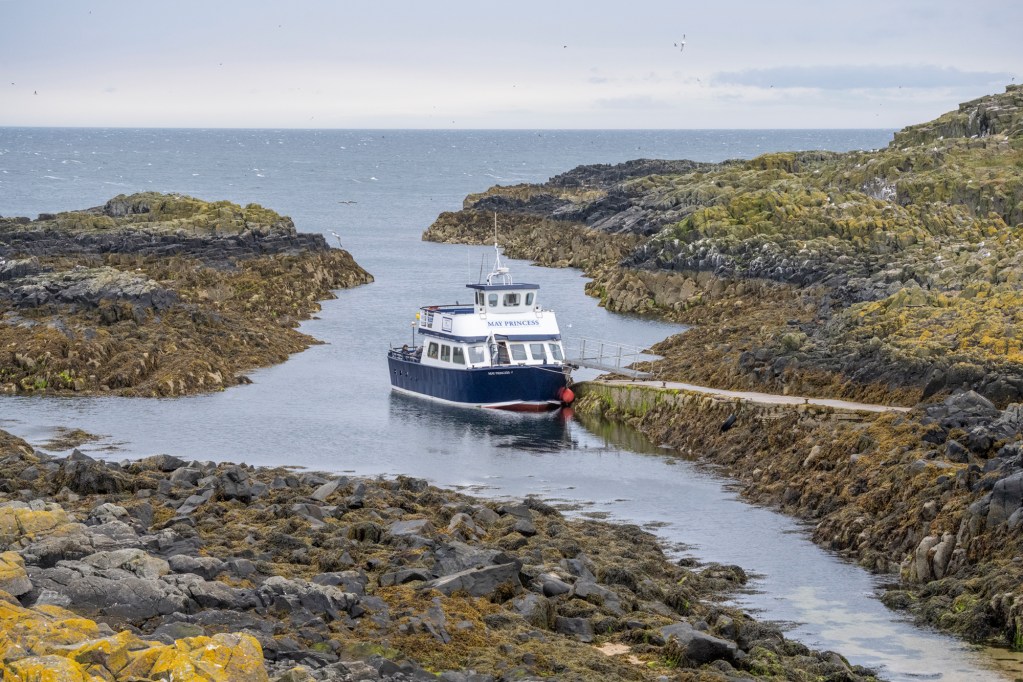
At the Isle of May
After swinging round the westerly end of the island, we were sheltered from the wind and entered an inlet to disembark. One of the resident rangers gave us a safety briefing and some background information about the island. This included the sad news that the foghorns had been decommissioned in 1989 when the lighthouse was fully automated.
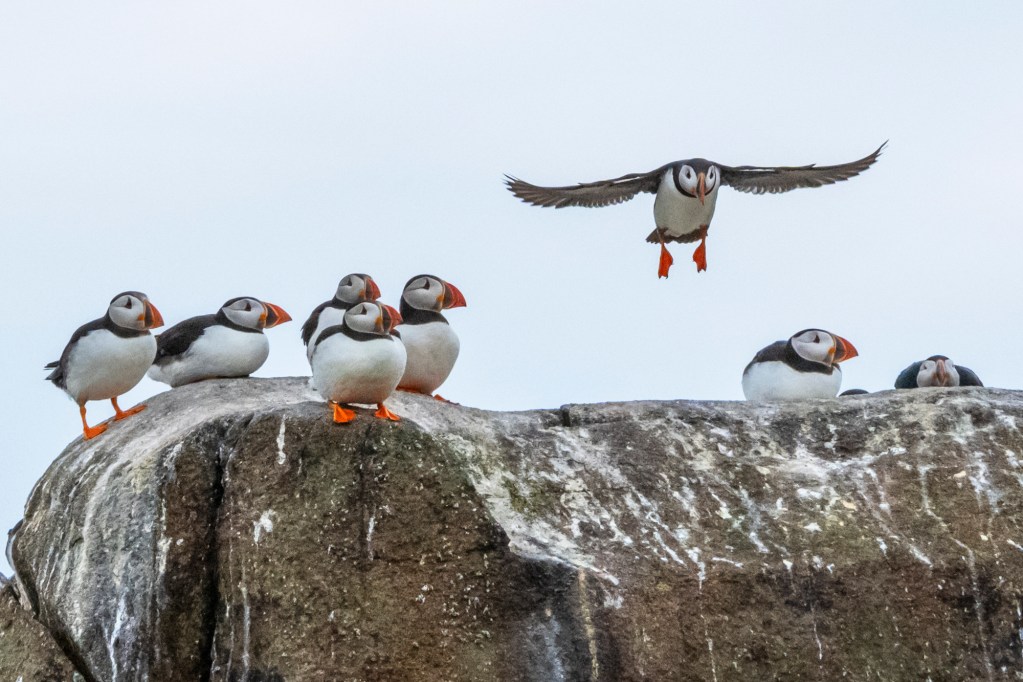
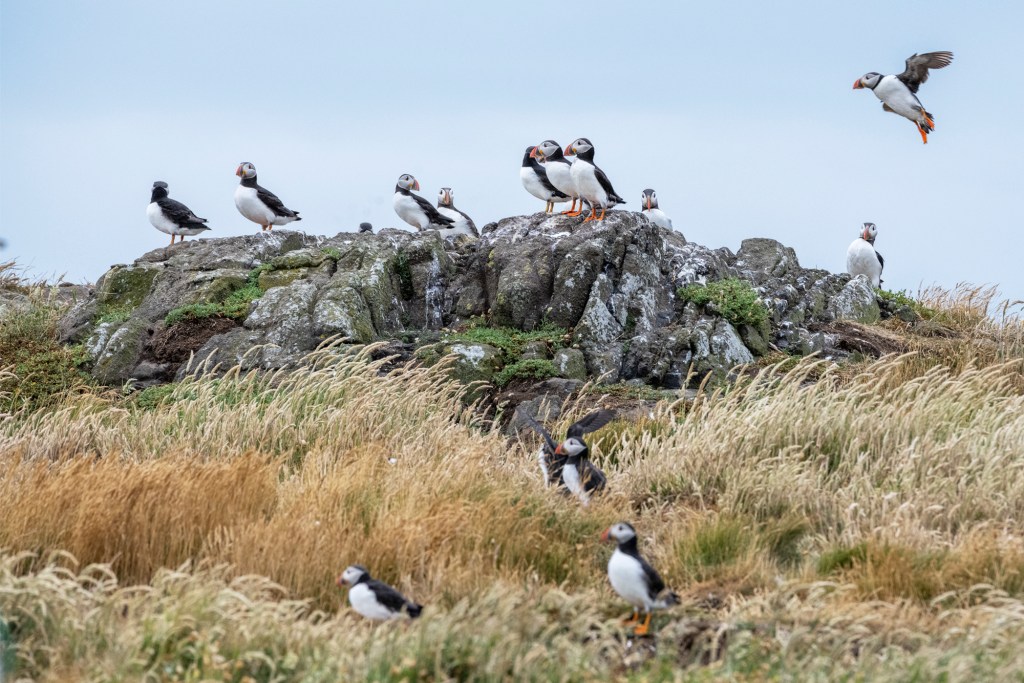
Puffins
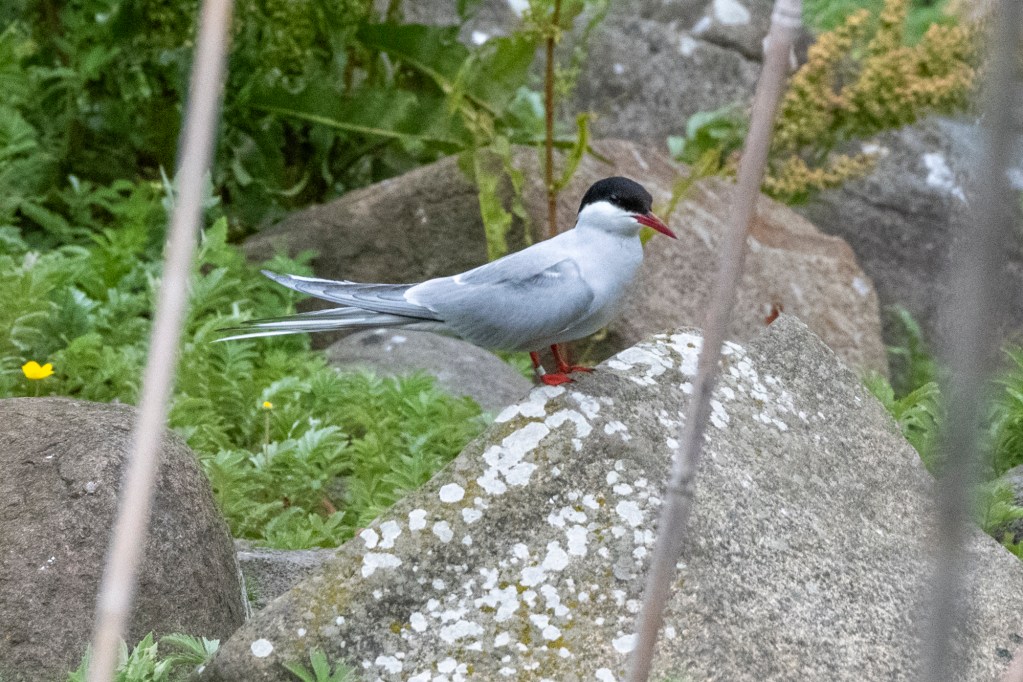
Our first impression of the island were the flocks of puffins flying around and sitting on the rocks. They were not quite as close as when we visited Lunga on our previous Scottish visit, but it was a delight to watch their behaviour and interactions with the other birds, Including the nesting Arctic Terns.
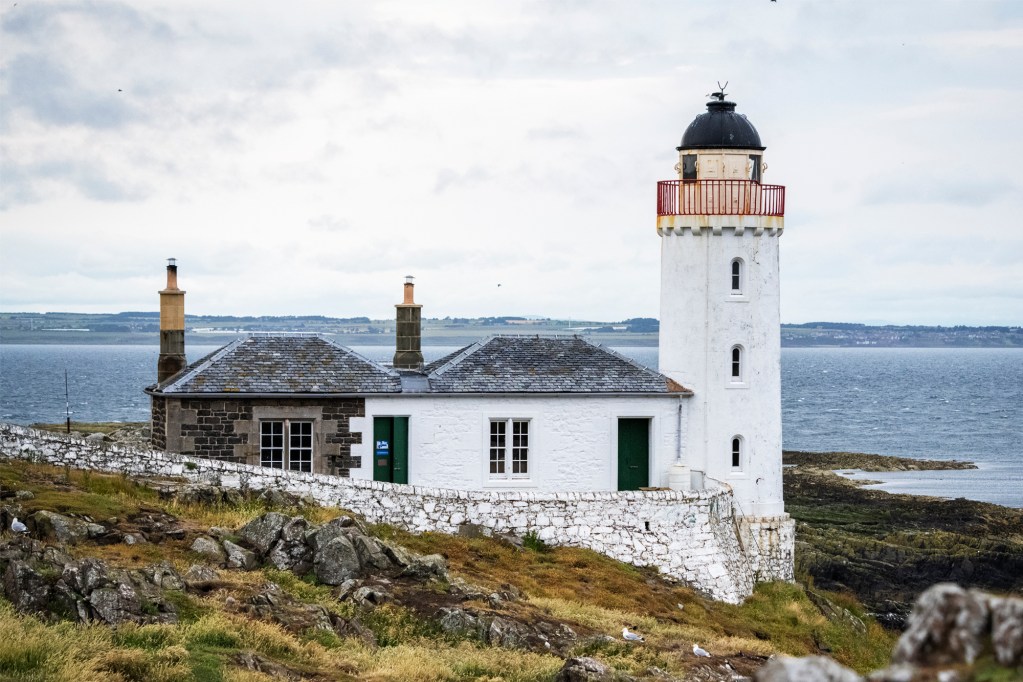
As we walked to the other side of the island, we were more exposed to the chilling wind, so it was a relief to complete the circuit. On the way we saw many other bird species, passed the lighthouse and admired the foghorns from a distance.
Main Lighthouse 1816
The South Foghorn
The Low Light 1844
Return journey
As our three hours on the island came to an end, we boarded the boat, this time choosing the upper deck. As we emerged from the lee of the island we felt the full blast of the westerly wind. Because we were heading north west, the boat was pitching and rolling across the waves. This motion was exaggerated on the upper deck, but nobody appeared to be seasick. Then it started to rain – turning my head into it was like a thousand needles trying to penetrate my skin. It was not the most comfortable of journeys, but our island visit made it bearable. The trip ended with the boat grounding in the harbour, so we had to wait for 10 minutes for the tide to rise to allow us to pull up at the side of the pier.
On the way back to Edinburgh, it was great to visit my elderly aunt, the sole survivor of that generation and find her in good health – at 88 years old she was still mentally alert, if a bit forgetful.
We had a quick turnaround at my daughter’s place as we had arranged to catch up with our friends in the city. Our meal at an Indian Restaurant was delicious, accompanied by stimulating conversation that included questions about them visiting us in Australia.
The end
So apart from our visit to Edinburgh the following day (see Edinburgh post), our European adventure came to an end.
Writing these last few posts since returning home has been such an enjoyable task – K and I have lived through our travels once more and we are only too pleased to be sharing them with you, thank you for reading and commenting on them.
If you would like to be notified of my posts when they are published, please subscribe below, unless you have already done so.